

UN Fact-Finding mission: The repressive apparatus in Venezuela remains intact after the capture of Maduro. We denounce regime change without democratic transition and setbacks in the immigration policies of the U.S. and the region
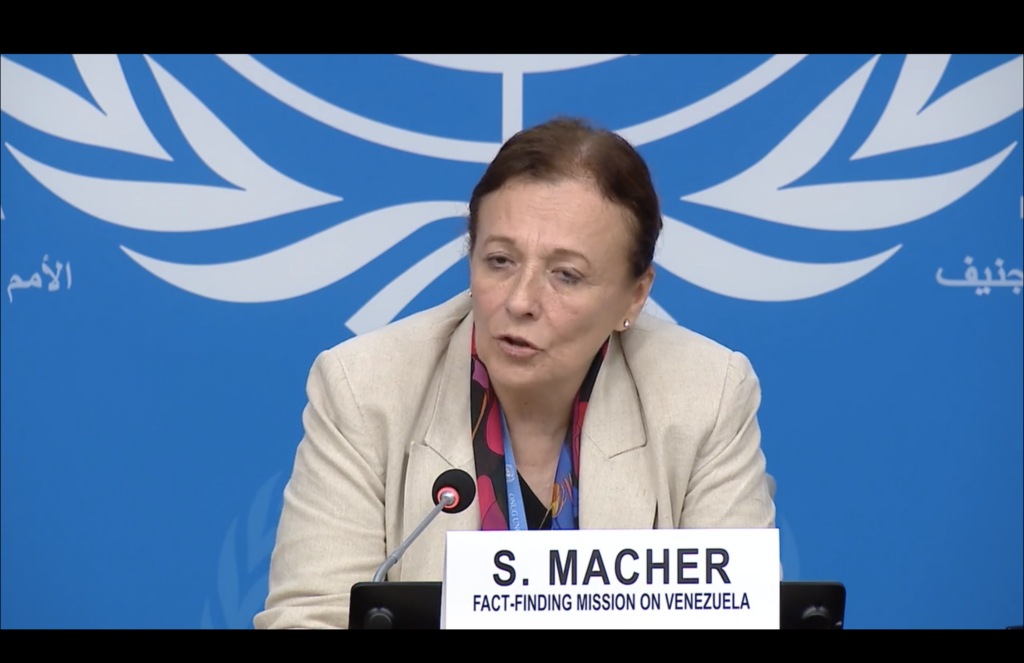
UN Fact-Finding Mission, last report September 2026
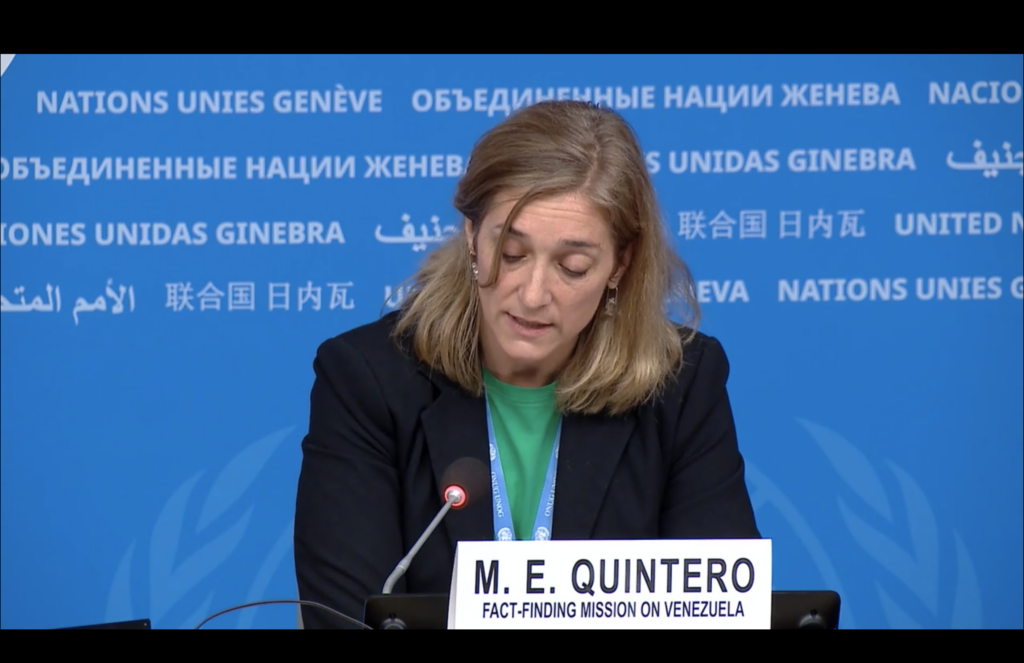
María Eloísa Quintero, Fact-Finding Mission’s on Venezuela expert
Despite the profound changes in the upper echelons of power after the capture of Nicolás Maduro on January 3, 2026, the repressive structure of the Venezuelan state has not been dismantled and continues to operate systematically. This is what the United Nations (UN) Independent International Fact-Finding Mission on the Bolivarian Republic of Venezuela warns in its most recent report (A/HRC/63/CRP.4), which documents that networks of social control and political repression are still active. This reality, contrasted with the analyses of civil society and multilateral agencies, shows that Venezuela is only going through a regime change and not a reliable transition to democracy.
UN MISSION FINDINGS: THE REPRESSIVE ARM IS STILL ACTIVE
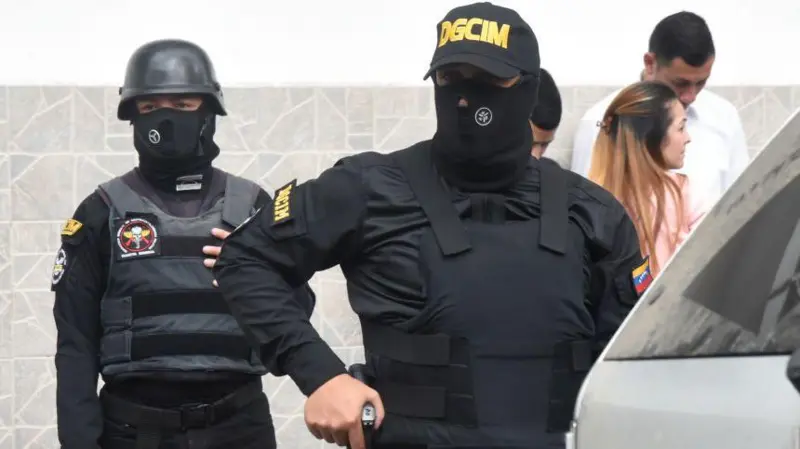
The latest report of the UN Mission examines in depth the decisive role played by armed civilian groups, known as “colectivos”, as a functional and informal component of the state repressive apparatus since 2014. Far from acting as isolated gangs, the Mission found reasonable grounds to believe that there is a strategic delegation of repressive functions, financing, provision of weapons and logistical coordination between these groups and the state security forces (PNB, GNB, SEBIN and DGCIM) under the cover of impunity.
Getty images
The report highlights that the colectivos continue to deploy in patrols, neighborhood intelligence work, selective persecution of political and social leaders and human rights defenders, as well as in the harassment of relatives of political prisoners outside detention centers. They also exercise control of local and illicit economies through extortion and the conditioning of access to basic goods. As they reported, the repressive apparatus remains unscathed under the interim mandate of Delcy Rodríguez, demonstrating that the lack of reliability in a true democratic transition lies in the persistence of these original coercive structures.
THE WHITE HOUSE’S CONTRADICTIONS: NATURAL RESOURCES VS. FREEDOMS AND DUE PROCESS
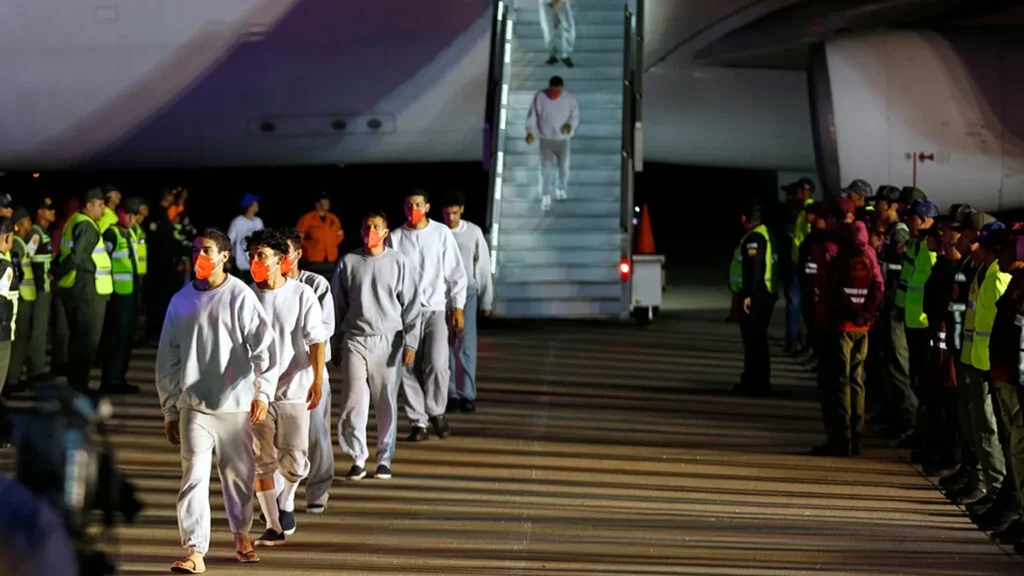
This situation is aggravated by the contradictory position of the United States administration. Despite maintaining a discourse of support for the freedom of the Venezuelan people, the White House has focused its greatest pragmatic advances on the energy sector and the extraction of natural resources, omitting to effectively pressure or impose conditions of strict compliance for the unconditional release of political prisoners or the institutional renewal of public powers. According to U.S. Congresswoman Maria Elvira Salazar, more than 50% of the people deported lacked any type of criminal record, denying the narratives that link Venezuelan migration with organized crime and revealing an unfounded stigmatization.
AP Photo
The implementation of deportation agreements to “third countries” by the United States has led to the forced transfer of Venezuelan migrants to nations on the African continent such as Liberia, Rwanda, Eswatini and Uganda. According to the International Committee against Impunity in Venezuela (CICIVEN), the U.S. administration has committed flagrant violations of due process – protected by the Fifth Amendment of its Constitution – by persecuting, criminalizing and imprisoning applicants for international protection who had been waiting for years for a formal resolution of their procedures.
Journalistic investigations carried out by The New York Times, El País and Efecto Cocuyo, together with warnings from organizations such as the American Immigration Council, document that through bilateral programs – such as the $5 million agreement signed with Liberia for the reception of up to 1,200 people – Venezuelan citizens have been sent to territories with which they have no ties or command of the language. These reports denounce violations of due process and international principles of protection, indicating that several of those affected had pending asylum applications or suspensions of expulsion at the time of their transfer to custody, being subsequently subjected to prolonged administrative detention or restriction of mobility in local facilities.
THE DOMINO EFFECT IN LATIN AMERICA: HARDENING AND RETROGRESSION OF REGULARIZATION PATHWAYS
These policies of persecution and criminalization against the Venezuelan population have not been exclusive to the United States, but have been replicated in an alarming manner throughout Latin America, violating international protection commitments. Reports from organizations such as Amnesty International, Human Rights Watch and various continental NGOs, compared with data from official sources such as Foreign Ministries and Migration Services, reflect a drastic reduction or cancellation of regularization and international protection pathways in the region:
- Ecuador: In accordance with the Regional Interagency Coordination Platform (R4V) and the monitoring of the Mixed Migration Centre, the Ecuadorian authorities proceeded to definitively cancel the extraordinary regularization process through executive decrees.
- Colombia: Migration records Colombia and the inspections of entities such as the Ombudsman’s Office show a drastic increase in deportations, discreet expulsions and joint biometric security interventions in key cities, affecting part of the more than 840,000 Venezuelans in an irregular situation who have been left without expedited channels of regularization.
- Peru and Chile: Both states have opted for the militarization of their borders, the systematic tightening of grounds for immediate redirection and the enactment of regulations that impose criminal sanctions on irregular stay, in addition to paralyzing the granting of refugee status to Venezuelan applicants.
- Panama: Through the National Migration Service and containment measures in the Darien jungle, deportation operations and assisted returns financed by international cooperation have been intensified, closing the way to international protection flows.
- El Salvador and the Dominican Republic: They have maintained the strict imposition of consular visas with requirements that are almost impossible for the diaspora to meet, resulting in an increase in expulsions and arbitrary administrative detentions of unprotected citizens. El Salvador has especially served as a provider of services for deportees, in deplorable conditions.
Human Rights Watch (HRW) has documented, together with allied organizations such as Cristosal, cases of Venezuelan citizens deported from the United States to the Terrorism Confinement Center (CECOT) in El Salvador without access to due process, trials, or contact with lawyers. It also publishes reports on abuses in immigration detention centers in the United States.
AN URGENT CALL FROM CIVIL SOCIETY
From the Coalition for Venezuela, together with our allied organizations and members, we reiterate that there will be no true democratic transition as long as human rights violations remain unpunished, repressive structures continue to operate and the international community prefers economic pragmatism over the protection of the life, due process and dignity of Venezuelans, in human mobility or not.
